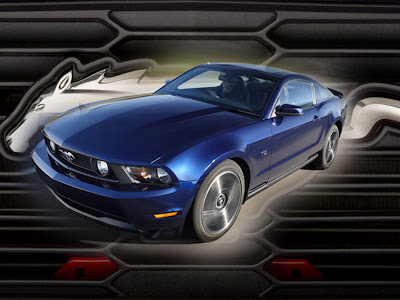
Combine those elements with the new Mustang's improved handling characteristics, more standard safety and
technology features and its already-strong safety and quality performance and reputation, and it's easy to see how the muscle car known around the world delivers on the promise of fast, fun and affordable performance for a whole new era.
In true Ford Mustang tradition, there is a "steed for every need." At launch, customers can choose from a V6 or V8 with their choice of coupe, convertible or innovative glass roof, plus several new options and features delivering the opportunity for customers to personalize their cleaner, meaner-looking Mustangs.
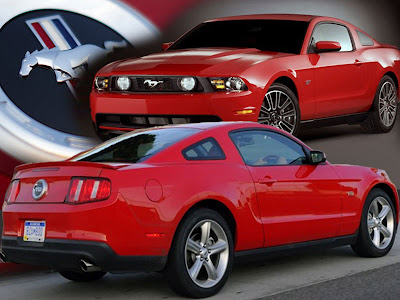 2010 Ford Mustang Sports Car 4.6-liter V8 Engine
"The best Mustangs have always been the ones that connect young America with the spirit of the times - and the 2010 does exactly that," said
J Mays, Ford's group vice president of Design. "The new Ford Mustang is close to the magnetic center of the original, fully loaded with the swagger you'd expect, but with modern refinement and attention to detail like you've never seen in a muscle car."
It starts with the more aggressive grille, punctuated with the first new Mustang emblem since the
car's introduction in 1964. Both the V6 and
GT have brand-new sculptured front-end
designs unique to each model. The headlamps and turn indicators, now integrated into one unit, are modern interpretations inspired by the 1970 Ford Mustang. On the V6, the fog lamps are located on the lower fascia, while on the GT, the fog lamps are again located in the upper grille - but are smaller than the outgoing model, similar to the original lamps of the 1967-68 models that inspired them.
The exterior sheet metal, except for the fast-back roofline, is all new for 2010. At the front, the new headlamps, lower fascias, fenders and grille are capped by a powerdome hood that adds to the muscular appearance while functionally allowing for enhanced air cooling of the engine. Mustang's washer-fluid nozzles are tucked into the cowl, while the antenna has been moved to the rear, both of which create a cleaner appearance while also reducing wind noise. The rear end design features aggressively angled rear corners, a sculptured decklid and prominent rear badge. A rear-view camera incorporated into the spoiler is available on some models.
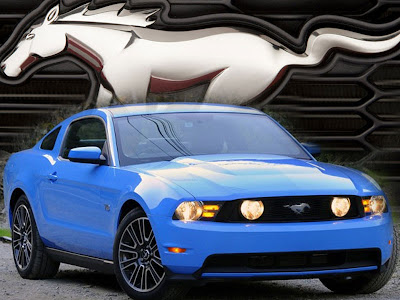 2010 Ford Mustang Sports Car 4.6-liter V8 Engine
Cleverly combining modern technology with Ford Mustang heritage is a signature of the 2010 model, in terms of both design and engineering. The wheel-and-tire combinations are 1 inch bigger across the board, ranging from 17 to 19 inches, which helps improve handling and braking. The shocks have been retuned on all models as well. The 2010 Ford Mustang
4.6-liter V8 benefits from innovations from the popular Ford Mustang Bullitt model. Power has increased to
315 horsepower. "It runs on regular gasoline, but if you put in premium it has adaptive calibration that will give you even better mid-range torque," Barnes said, adding that Easy Fuel™, Ford's innovative capless fuel system, is standard on all models. "It's an upgrade to the most-robust, most-accessorized engine in the marketplace today," Randle added. "No one has the reliability, no one has the upgraded options. This is a fantastic engine, proven on the
race track, the drag strip and on the highway."
AdvanceTrac™ Electronic Stability Control (
ESC) is now standard and complements Mustang's all-speed traction control and anti-lock braking system (
ABS). In addition to all of the design and driving dynamics improvements, the 2010 Ford Mustang is engineered to maintain its top government safety ratings. Standard safety equipment includes: dual stage front driver and passenger air bags; front seat-mounted side air bags; and, Ford's Personal Safety System.
The powerful new one-piece instrument panel design is crafted in seamless soft-touch TPO (Thermoplastic Olefin) skin fully encompassing available genuine aluminum-finish panels. Mustang's chromed-ringed gauges and dual-vane air register vents are precisely crafted and positioned.
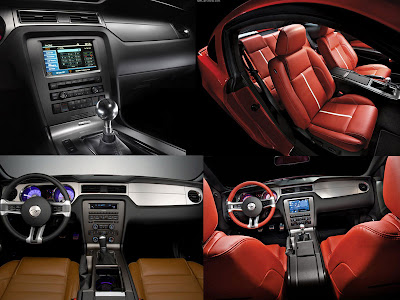 2010 Ford Mustang Sports Car 4.6-liter V8 Engine
With a completely redone exterior that echoes the classic Mustang designs of the past, an interior featuring world-class materials, numerous technology upgrades and an improved driving experience, the 2010 Ford Mustang is poised to become the latest classic in the proud line of Ford's iconic American muscle car.
From the V6 to the
Shelby GT500, the goal was to make each model appear even more sculpted than its predecessor. The result is a lineup of iconic cars that maintain their identity in a contemporary way. Each classic design element - the grille shape, the "hockey stick,' the hop up into the rear haunch, the quarter-glass window, the three-bar tail lamp, the center-mounted gas cap - is modernized in a way that lends the new car even more presence and character. The aggressive look is enhanced by larger grille openings flanked by slimmer headlamps, which now incorporate integrated turn indicators.
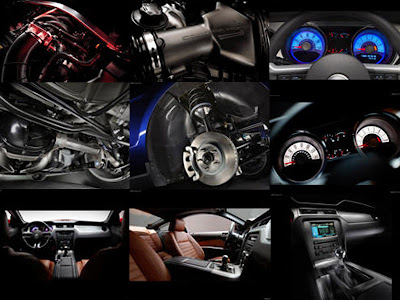 2010 Ford Mustang Sports Car 4.6-liter V8 Engine
The team further enhanced the agile design by stripping away unnecessary clutter. That included minimizing overhangs, eliminating the rear key-hole cylinder, chamfering the rear corner and simplifying the pedestal spoilers to a more compact design. The antenna, previously on the front fender, is now much shorter and relocated to the rear of the 2010 Ford Mustang. The result is a clean, sporty design that looks smart and efficient.
Another inherited and distinctly identifiable Ford Mustang cue comes in the form of the tri-bar tail lamps. The three individual red chambers, each lit sequentially by a single Luxion LED, are separated by two clear vertical back-up elements, ensuring the tri-bar look is recognized in lit or unlit conditions. The sequential illumination of each chamber is a unique and important characteristic of the 2010 Mustang's identity.
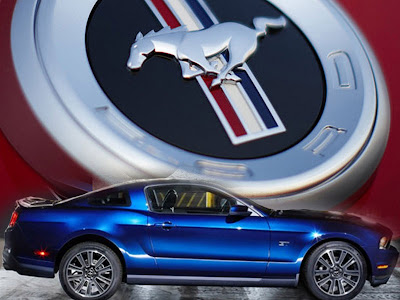 2010 Ford Mustang Sports Car 4.6-liter V8 Engine
Extensive improvements to the next-generation Ford Mustang, readily apparent on the exterior design and interior content and material upgrades, will be felt in the ride and handling of the 2010 model. Taking a cue from the successful Mustang Bullitt and Ford Racing vehicles, many of those enhancements are carried through the full Ford Mustang lineup.
Tires are increased by an inch across the Ford Mustang line, with 17-inch tires standard on the V6 and 18-inch tires standard on the V8. A 19-inch Pirelli Summer tire is late available as an option for those seeking higher performance. Design and engineering teams spent a lot of time honing the aerodynamics of the 2010 Ford Mustang, ensuring that both the
aerodynamic drag and lift balance were improved for better overall
efficiency.