Showing posts with label Bentley. Show all posts

Thursday, October 21, 2010

Bentley Sport Cars Bentley Silver Wings Concept

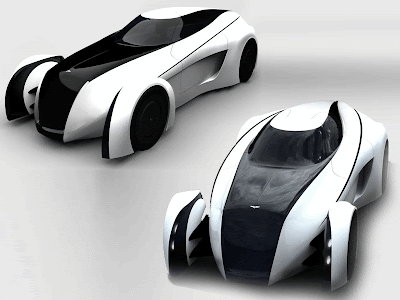
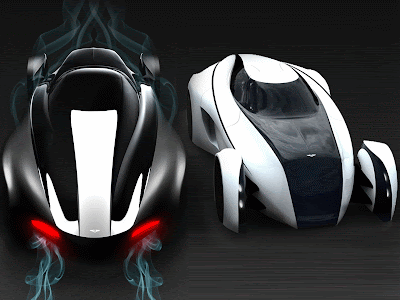
The British carmaker Bentley, owned by Volkswagen Group had displayed a W16 powered super sports cars at the Geneva Motor show. The project was conceived as a virtual mid-engined successor to the 1999 Hunaudieres Concept. The front end of this vehicle features an aggressive front splitter and air intake set up to emulate the F22 Jet and is characterized by the trademark Bentley domed grill and twin circular headlights.
The Bentley Silver Wings Concept also features a raised beltline and diminishing character lines that help define the supercar embodiment of this concept and elongate the rear-end of this vehicle. This really is the Bentley of supercars...
Dubbed the Bentley Sport Cars Bentley Silver Wings Concept, the concept is inspired by the brand’s racing heritage as well as the F22 Raptor jet fighter. Bentley Silver Wings Concept is the usual hodgepodge of design elements from Aston Martin, Zonda, Saleen and Bentley of course, but it still has a certain charm about it.
Bentley Sport Cars Bentley Silver Wings Concept
The Silver Wing concept car uses a harmonious mix between mid-engine layout and aggressive design cues. The front end uses an aggressive layout built around Bentley’s characteristic domed grille and headlights that draw inspiration from the company’s current design language. The exterior also includes large rear air intakes for the rear brakes, and the 20" or 21" alloy wheels.
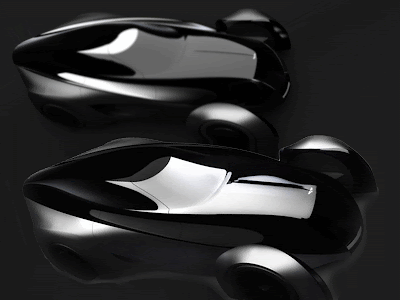
Shawn Wood and Guohua Cheng are two industrial designers recently graduated from the Industrial Design course at Tianjin Academy of Fine Arts (TAFA), China. They are two college kids from China have come up with something that will blow your mind completely. The W16 display car, which was a concept called the Hunaudières had a cab-forward design with sleek looks and was done up in British Racing Green. The concept cars had more chrome than Ludacris’ Escalade.

Friday, October 8, 2010

Paris 2010: 2011 Bentley Continental GT, live and in the flesh

2011 Bentley Continental GT live debut

Here is your first glimpse at the redesigned 2011 Bentley Continental GT as it makes its world debut at the Paris Motor Show. Earlier, we mentioned that it will receive a nearly four percent price hike over the previous model, which is nothing compared to the overall improvements the new car has received.

Like any car, it has good and bad angles (obviously, the exception to this rule is the Maserati GranTurisumo which looks beautiful from every angle...) – we'll hold off final judgment until we can see it outside in natural light, not surrounded by a mob of flash bulbs and clamoring journalists.

Friday, September 10, 2010

Online configurator for the new Bentley Continental GT

Bentley Continental GT

The Continental GT has only just been unveiled and already Bentley is giving potential owners the chance to customize their Continental GT. The online configurator is called the "Visualiser" and it allows you to see your Continental GT in one of 14 exterior colors, a range of wheel designs, and numerous interior choices. Not exactly the perfect configurator on the market, but at least everyone will be able to get an idea of what Bentley has to offer!

All you have to do is get online and start having some fun!

Refresher: The new Continental GT gets a more upright grille with new headlamp design, in traditional four-lamp format and LED daylight-running lamps, a bootlid inspired by the Bentley Mulsanne and flared elliptical exhaust tailpipes. Under the hood there is a 6.0 liter W12 powertrain that delivers a total of 567 HP and 700 NM of torque. The car sprints from 0 to 60 mph in 4.4 seconds and can hit a top speed of 198 mph.

[Source:Bentley]

Tuesday, September 7, 2010

2011 Bentley Continental GT arrives with new design, optional V8

2011 Bentley Continental GT

The 2011 Bentley Continental GT is just the second generation of the blockbuster coupe that rumbled ashore eight years ago. And frankly, this new one looks a lot like that ancient one, but Bentley would have us believe that this is actually a completely new car. Outside, the bodywork gets all kinds of massaging: prominent front fender lines that roll over the headlights and into the more-upright grille, a more pronounced grille treatment that asserts itself into the lower intake, LED running lamps surrounding the main headlight elements, a double-horseshoe rear-end treatment inspired by the Mulsanne and taillights that curl into the rear fenders. For a start...

More substantively, the 2011 Conti gets a boost in horsepower from its 6.0-liter twin-turbo W12 engine, hitting 567 horsepower and 516 pound-feet. The engine swipes a page from the Continental Supersports playbook and gains flex-fuel capability, accepting any combination of gasoline and E85. To keep you in touch with that power, Bentley's six-speed Quickshift transmission swaps cogs more quickly and does double downshifts. To keep that power in the right place, the rear track is wider, front-to-rear bias of the all-wheel-drive system is now 40/60 front-to-rear, and the coefficient of drag has been reduced to 0.33. 0-60 mph? 4.4 seconds? Top speed? 198 mph.

As of next year, the nominally eco-conscious will be able to get their Continental GT with a 4.0-liter V8. Numbers haven't been released yet, but you can expect it to register high on the horse and torque while getting significantly better gas mileage than its big brother.

Perhaps the best upgrade of all: the interior accoutrements that now boast an eight-inch touchscreen interface, dynamic navigation and Google Maps. Joining that are a sleeker dash, climate-controlled "Cobra" seats sculpted to provide more rear legroom, and leather-lined door pouches with water bottle holders. It's everything the current Continental GT is.

[Source: Bentley]

Thursday, March 11, 2010

Bentley has presented a high-speed cabriolet

Continental Supersports Convertible

On the Geneva motor show the manufacturer of luxury cars company Bentley has presented the fastest in the world a cabriolet. The novelty has received unambiguous name Continental Supersports Convertible.

Bentley Continental Cabriolet

Under a cabriolet cowl 6,0-l engine W12 power of 621HP, working together with 6-step automatic transmission ZF has taken places. Dispersal to 96 km/h for 3,9 sec, and the maximum speed reaches 325 km/h.

Cabriolet Bentley

Cost of new cabriolet Bentley: from $300,000US...

Related Posts: Bentley

Sunday, March 7, 2010

Geneva 2010: Bentley Continental Supersports Convertible

Bentley Continental Supersports Convertible

Although Christmas was many months ago, we're guessing that the fine folks at Bentley specified the paint on their Bentley Continental Sports Convertible show car some months ago. How else to explain the scrumptious eggnog metallic finish and interior piping? Perhaps it was the droptop's yuletide bounty of power (621 brake horsepower and 590 pound-feet of torque) from its force-fed W12 engine that inspired them. Or the fact that at over 200 mph, this would make for one hell of a sleigh.

Either way, we believe that this flex-fuel droptop will finally complete the automaker's already expansive Continental lineup (we expect to see the next-generation model very soon), but admittedly, we've figured that Bentley's volume car didn't have any more derivatives left in it before, and here we are.

[Source: Bentley]

Tuesday, March 2, 2010

Geneva 2010: Touring Superleggera Flying Star

Touring Superleggera Flying Star

The majority of auto journalists are car freaks by nature. One of the many defining characteristics of a car freak is an undying, unadulterated love of any sort of shooting brake. If you're not a car freak, or just don't know the term, a shooting brake is a two-door station wagon. Why is this bodystyle so beloved? Many reasons, but let's just chalk it up to the impracticality of a sports car mixed well with the practicality of a station wagon. What can we say, it's a boat floater.

For Geneva, Italian car maker Touring Superleggera showed us freaks their new, stunning Flying Star. Built at the request of a customer and with the full cooperation of Bentley, the Flying Star is a shooting brake built from the Bentley Continental GTC. Honestly, there's not all that much to tell. Underneath the new skin sits... a Bentley Continental GTC, complete with its 560-horsepower, 479-pound-feet-of-torque twin-turbo 6.0-liter W12. Or, if you insist, Touring Superleggera will build you a GTC Speed-based Flying Star with 610 hp and 553 lb-ft of torque. Oh, and there's a support structure between the rear shocks that acts as both a hard structure for the new roofline and an integrated roll bar.

The real story, however, is being told by your eyeballs. Many of us have never been all that enthused by the shape of the Continental. But the Flying Star, well, it completes the design. How good? Four of us Autobloggers were gathered around a single laptop gasping at admiring Touring Superleggera's handicraft work. So yes, we think this is a very wonderful looking car. 100-percent picture perfect? No, as the tailgate's not quite... something. But let's not be petty, the Flying Star is fantastic looking.

Useful, too, as you can fit four golf bags in the rear. You might be wondering why a two-seat vehicle would need to carry four golf bags, but if you look closely you'll notice two additional seats in back. They of course fold down, allowing the Flying Star to swallow even more golf bags (no official word on exactly how many).

Besides the Flying Star's overall shooting brakeness, our favorite part has to be the woven leather "boot carpet," i.e. a beautiful material that covers the rear cargo area, the back of the rear seats and the rear floormats. Have we ever been excited about carpet before? No, never. And we doubt we ever will be again. That said, we doubt we'll be seeing any coachbuilt cars that get us as excited as the Flying Star. Now word on price (think: expensive!) but Touring Superleggera will be building just under 20 examples per year. Go car freaks, go.

[Source: Touring Superleggera]


The origins of the Bentley Continental Flying Star by Touring

It takes an avid and passionate collector, with a taste for special coach building, to be at the basis of a project like the Bentley Continental Flying Star by Touring. Exactly such a person contacted Touring Superleggera in early 2008.
An interesting initial creative process emerged involving parameters for design, proportions, vehicle concepts and - last but not least- feasibility and technical factors.

Many steps from design to execution were shared with the customer, who contributed with his own ideas and taste to personalise the project and create a unique automobile.

A basic idea was formed by the desire to diversify Bentley's very successful Continental model range, and to explore new concepts.

The transformation of a 2-door coupé, by expanding the roof line and enlarging the interior dimensions, has led to a design concept baptised as shooting brake: a sports car featuring enough space to join a hunting party or a golf tournament with elegance and efficiency. Touring Superleggera explored the same field back in 1966, resulting in the amazing Lamborghini Flying Star II prototype. It was a dramatic interpretation of a sports car based on a new 2-volume design, safeguarding the dynamic performance. The Flying Star reference is a Touring parameter of sportive elegance, applied to many famous cars since the companies' start in 1926.

Flying Star in 2010 - the Bentley challenge

The Bentley Continental GT range set innovative and high standards for a new generation of very sophisticated Grand Tourers. As such, this model triggered the imagination of automotive designers and coach builders elsewhere. The GTC convertible, featuring a very rigid platform, proved to be a fully congruent basis to Touring Superleggera's plans for the new Flying Star.

The new project required the modification of a number of external dimensions starting from the car's A-pillar backwards: extended roof line, a wider section including the doors, new aluminium door skins and a new all-aluminium, electrically operated tailgate. It also includes a completely new rear compartment with two foldable rear seats and a variable loading space.

This long list of modifications and transformations had to be paired with, and to remain fully compatible to the basic car's technical layout and components. Given the sophistication of the basic car, a new challenge was laid out for Touring's craftsmen and engineers. The final result proves that special coach building can live on well into the 21st. century working with respect to the original manufacturers.

Touring Superleggera is particularly proud of the fact that the complete productive cycle of the special coach building process was realized in their workshop near Milano. Modern body engineering went hand in hand with traditional handicraft skills, maintaining the highest quality directives for the final product.
The Bentley Continental Flying Star by Touring

Project Engineering

The body engineering processes at Carrozzeria Touring are aimed at safeguarding key parameters for quality, safety and feasibility, within the perspectives of low-volume automotive production. The project went through 1:4 and 1:1 modelling, based on the CAD and CATIA data from the basic vehicle. This digital basis resulted in a milled 1:1 master model and a number of 1:1 moulds for the manufacturing of the new external skin, and for important new body components. The rear bodywork was reinforced with an integrated structure between the rear suspension domes, functioning both as roll bar, and as support for the new, extended roofline.

All structural additions and modifications were thoroughly studied, using advanced simulation methods and FEM-analysis. As a parallel process, these data served for the homologation of the structural changes, including the new foldable rear seats. An important number of hard points from the basic car could be saved and carried-over. The engineering team at Carrozzeria Touring was particularly pleased with the quality assurance support from Bentley engineers.

Design

'Variations on a theme' not rarely implicate a larger design challenge, than starting-off with a white sheet of paper. The basic mission was to create a body incorporating the essence of Touring elegance and harmony, while clearly recognizable as a Bentley. This task was challenging because a fully new volume had to be added to the GTC basis. The proportions were totally new, but the overall design had to be kept consistent. That is why only the section in front of the car's A-pillar, including the windshield has been maintained.

Viewed from the rear, the new tailgate dives between the wide rear wings. The oval rear light chrome bezels are a reference to Bentley fastback cars of the '50. The side view features a low roof, prominent quarter panel shoulders and wide wheel arches, suggesting perfectly mastered energy.

The Touring Superleggera designers were challenged by the target to give the new interior equal elegance, whether the back of the rear seats are folded or not. The solution was to design an "S" shaped trim of the rear quarter panels linking the passenger area to the rear luggage area. The beige and dark green leather contrast also adds to this visual unity.
First time ever in this class and size, the twin individual rear seats fold completely to create a flat loading surface more than 2m long with 1200lt capacity. This is instrumental to fulfill the functional mission profile, which requires loading in full comfort a wide array of leisure equipment, including 4 full golfing bags with the rear seats up. An example of bespoke finish is the woven leather boot carpet offering superior endurance and coordinated with the special luggage set.

The overall result is perfectly in line with the Touring and Flying Star heritage: a timeless shape, a design statement combining elegance and sportiveness, with a strong and unmistakable own personality and individuality.

Manufacturing

When digital technologies are blended with traditional manufacturing skills, a fascinating process emerges that is typical for Touring Superleggera. A discriminating factor for traditional coach building was and is the vast amount of handwork that is involved in the creation of a new body. In this process, multiple practical solutions are also found for a wide variety of minor technical issues. This includes quick, practical solutions based on years-long experience, common sense and an expert eye.
The result is a final product entirely produced within the high quality parameters of today's automotive industry.

From the A-pillar backwards, new exterior body panels were hand shaped in steel - including the roof, new wider rear wings, and the internal reinforcements of the complete rear section of the car. Aluminium was used for the door skins, and for the complete rear bonnet including its structure. New, handmade brightwork was added according to the new exterior design.

The all new rear compartment required shaping of the foldable rear seats and a full set of interior panels, leather trimmed with meticulous care. Wide leather hides were selected with great attention to provide uniform finish to the vast continuous surfaces.

After inspection, the body in white was prepared and painted in the Touring state-of-the-art paint facilities. The final result underwent again a special final quality audit.

Performance

The Bentley Continental Flying Star by Touring inherits the chassis of the Continental GTC. The 6-liter, W12 engine is available either in the 560HP version which delivers 650NM of torque at 1600rpm or the GTC Speed variant which delivers a massive 750Nm from 610HP. The car exhibited in Geneva Motor Show features the GCT Speed specifications.
Performance braking, cornering and traction functions mesh together to provide precise and immediate driving control under extreme or difficult conditions.
Self-adjusting air springs and electronic dampers operate independently for each wheel. All-wheel drive promotes advanced traction.

Homologation

The model is CEE homologated according to the new low-volume production directive. For the first time since its introduction, the type approval was awarded without destructive test, using simulation and FEM-analysis.

Future Programme

Touring Superleggera undertakes a limited production run of up to 20 units of the Continental Flying Star. This series will be exclusively built to special order and customer specifications. The car is offered at a basic price of 2 590.000 when based on a Continental GTC - 560 PS. Other versions on request.
The car will be serviced at the Bentley dealers. Bentley Motors and Touring Superleggera have developed a special mutual warranty program, which safeguards warranty clauses for both the basic car, and the transformation by Touring.

Personalisation

The customers are actively involved in the early stage to choose the specifications of their own unique automobile, ranging from bespoke cabinetry and trim to a wide choice of dedicated options. The accessory collection includes the Touring designed luggage set coordinated with the boot trim, and the distinctive Borrani X-Ray spoke wheels.
Blending advanced technology with craftsmanship, Borrani 20" 9.5j X-Ray spoke wheels provide distinctive design, precision and comfort. Featuring monolithic spun aluminium rim and hand assembled steel spokes, they can be tailored to the car's painting and finish.

Louis de Fabribeckers, Head of Design

Responsible for the design team of the Flying Star project is the 32 years young Belgian designer Louis de Fabribeckers.
Graduated from the ISD of Valenciennes in France in Engineering Design, de Fabribeckers started to work with Touring in 2006 as project leader.

Under his hands, the Maserati based Bellagio and A8GCS Berlinetta projects materialized; the first one being a fastback, 5-door version of the Quattroporte model, and the second a magnificent concept for a light and compact, modern sports car. Both new projects were presented at the occasion of the 2008 Villa d'Este Concours d'Elégance. The A8GCS Berlinetta was granted the 'Plus Belle Supercar de l'Année 2008' award by the expert jury of the 24th. Festival Internationale de l'Automobile in Paris.

Louis de Fabribeckers lives and works in Milan.

Technical information
(where appropriate based on a Continental GTC Speed)

ENGINE

Capacity 5998 cc W shaped 12 cyl.
Max.Power 610 PS /449 kW @ 6000t/m
Max. Torque 750 NM @ 1700-5600t/m

DRIVELINE AND TRANSMISSION

Continuous all-wheel drive
6-speed automatic transmission

PERFORMANCE

Max. Speed 322 km/h (TBC)
Acceleration 0-100km/h 4.8 seconds (TBC)

DIMENSIONS

Overall length 4815mm
Width 1943mm
Overall Height 1395mm
Min. Boot volume 400L
Max. Boot volume 1200L


The Touring A8 GCS Berlinetta is now ready for one-off production

Geneva is the first public appearance of this prototype after the Concours d'Élegance previews.

Touring Superleggera has completed the development stage and is now ready to produce a rolling concept for one of the passionate clients who showed their enthusiasm since the first debut.

The Berlinetta is based on a high-end production platform revised by Touring. It has been carefully selected to match the mission profile in power, torque, and handling.

Compact, light and powerful, the shape embodies the perfect high performance sports car in the Touring tradition. The A8 GCS Berlinetta is a strict two-seater with perfectly balanced volumes and frugal decoration.

"We wanted a strong project" – says the Belgian Head of Design of Touring Superleggera, Louis de Fabribeckers – "I drew from the stylistic heritage of Touring the work of surfaces and also this sinusoidal line across the side of the Berlinetta".

The car is 4,20 m. long and only 1,22 m. high on a 2,50 m. wheelbase. Engineers target a 1500 kg weight for the finished car.

Carrozzeria Touring Superleggera

Founded by Felice Bianchi Anderloni and Gaetano Ponzoni in 1926, the company started to produce custom built automotive bodywork with two distinctive features form the very beginning: sporting elegance and lightness. Early customers were reputed car makers as Isotta Fraschini and Alfa Romeo. It would mark the start of a flamboyant period, also culminating in the 'Flying Star' period with several spectacular spider coachworks.

Touring Superleggera also gradually researched the streamlining process. The marriage between this, and their Superleggera construction system using aluminium body panels over a light but rigid tubular steel frame, resulted in some extremely elegant masterpieces such as the 1938 Alfa Romeo 8C2900 Touring spider, which today have become icons of automotive design and body construction. In 1945, the excellent Carlo Felice Bianchi Anderloni joined his father at the company, which soon started to receive its first orders from a motivated Modenese entrepreneur called Enzo Ferrari. The Tipo 166 Touring 'Barchetta' of 1950 formed a new milestone for light, elegant and effective design on a competition chassis.

Under Carlo Felice, Touring saw its industrial customer basis grow in the mainstream of the expanding automotive industry in Italy and Europe. A number of niche models were designed and built on Alfa Romeo 1900, Lancia Flaminia and Maserati 3500. Another new inspired car manufacturer from the Bologna area relied on Touring's skills: Lamborghini. At the same time, Aston Martin produced their DB4, 5 and 6 models with a license for the Superleggera system.

The energy crises of the early seventies, and the increasing mass production methods in the car industry would regretfully force many specialist companies to close their doors. The last production car left Carrozzeria Touring in 1966, but the true Touring spirit was firmly consolidated in the company's products, that found their ways to an international community of motoring enthusiasts and car collectors.

In 2006, the year of its 80th. Anniversary, Carrozzeria Touring Superleggera of Milan restarted its activities, now part of Zeta Europe BV, a private company specializing in automotive high-end products and brands.

Friday, February 26, 2010

Bentley AERO ACE Sports Car Concept Next-Gen Speed VI

The Bentley Aero Ace Speed VI is the brainchild of auto designer Gabriel Tam and has been inspired by the original Speed 6 driven to victory by the Bentley Boys of the ’20s at Le Mans. The next-generation Speed VI is an overtly sporting vehicle with the raw aggression of a pure blood racer, while retaining the refined elegance of past Bentleys.
Bentley AERO ACE Electric Sports Car Concept Next-Gen Speed VI
The design was inspired to signify the raw aggression of a sporting vehicle, while paying close attention to the aerodynamic properties of each element of the vehicle. The adjustable aerofoil / spoiler feature double wishbone suspension to maximize the efficiency.
Bentley AERO ACE Electric Sports Car Concept Next-Gen Speed VI
Close attention during the designing period to refine the aerodynamic properties of the vehicle has resulted in enhanced efficiency and increased speed. Additionally, a double wishbone suspension has been incorporated within the adjustable spoiler to further better its efficiency.
Bentley AERO ACE Electric Sports Car Concept Next-Gen Speed VI
The twin rear heat exhaust-ducts of this zero-emission concept car are fed by the air intake used to keep electric motors cool. Electric motors are located towards the rear of the vehicle, while the battery cells are located towards the front in an even arrangement to balance the weight. The electric motor cooling system features air intake and incorporates diffusers that help air flow to create down-force.
 
 
Bentley AERO ACE Electric Sports Car Concept Next-Gen Speed VI
The wheels are semi enclosed that improves aerodynamics, while the 1+1 seating arrangement offers focused driving experience. Also, the diffusers aid air flow in this vehicle creates the down-force, the battery pack is equally distributed and the vehicle has a 1+1 seating layout for finest weight distribution.
Bentley AERO ACE Electric Sports Car Concept Next-Gen Speed VI 

Tuesday, February 2, 2010

Carrozzeria Touring reportedly to unveil coachbuilt Bentley Continental GTC in Geneva

Bentley Continental GTZ by Zagato


If you were enticed by Zagato's take on the Bentley Continental GT (pictured above), rumor has it Carrozzeria Touring Superleggera has a version of its own in the works.

Anticipated to be unveiled at the upcoming Geneva Motor Show in two months' time, Touring's coachbuilt Bentley is slated to be based on the convertible Continental GTC, and could borrow its underpinnings from the upcoming GTC SuperSports.

Like Zagato's Continental GTZ, the second coachbuilt Continental reportedly received support from Crewe. Since its revival, the Carrozzeria gave us such Maserati-based creations as the A8 GCS and Quattroporte Bellagio Fastback, and was recently rumored to be working on a custom Ferrari design as well.

[Source: Autoblog.nl]

Friday, January 29, 2010

First Drive: Bentley Continental Supersports

Bentley Continental Supersports

In the superluxe world, we're used to this maneuver: add a few horsepower, shave a tenth or two, sew in a few extra threads, name your exclusive new interior color something like "Algerian Beet" and voilà, a 50-percent price premium for three-percent more car. On the surface, the Bentley Continental Supersports is a GTC Speed that has gone on The Biggest Loser, Extreme Makeover, and Alter Eco. But you know what they say about the proof and the pudding, so the question is whether the Supersports is a nameplate special or a genuinely higher evolution of the baller's favorite steed. We spent a day in the wilds of New Jersey and upstate New York, along with a few hours at Monticello Raceway to find out. Ladies and gentlemen, allow us to introduce you to the first Continental you can feel.

Think of the Bentley Continental Supersports as Usain Bolt: both are hypothetically too big to perform as they do, but they do it anyway.

The Continental GT is not a sports car. Nor is the Continental Supersports. Nevertheless, both Bentleys do things that only sports cars can do, and the Supersports does some of them more quickly – like 0 to 60 in 3.7 seconds. The difference is in how they do it. In our review of the GTC Speed, we wrote that it achieves these feats by taking the goddess of physics hostage, forcing her to obey. Bentley should be commended for engineering a 5,182-pound beast to perform such feats at all, but it remains an act of coercion.

In the GTC Speed, though, the driver is separated from all that imperative violence by multiple layers of sound deadening, carpeting, wood and leather. If you really pay attention, you can catch a soupcon of the brute force wizardry being conducted somewhere in the Bentley's deathly hallows, but why would you? There are 1,100 distracting watts of Naim audio to command the ears and a woman named Katerina or Genevieve or Summer in the front seat to command everything else.


The Supersports, on the other hand, requests your attention. Why? While the conversion to being a high-po ethanol coupe does involve more electro-mechanical magic, it's primarily achieved the old fashioned way: less weight and more power.

A 243-pound reduction from a 5,000-pound car isn't much – 4.86 percent, to be exact – but the Supersports drops weight in the right places. Unsprung mass has been reduced by 66 pounds with the addition of carbon-ceramic brakes and lightweight wheels, while the chassis gives up 20 pounds and the elimination of the rear seats, replacement of the wood with carbon fiber trim and the fitment of those carbon fiber seats nixes nearly 160 pounds. But a strict diet isn't the only regime Bentley put the Supersports on.

Output is up to 621 horsepower at 6,000 rpm – another 21 hp over the GTC Speed – thanks to an increase in boost pressure, with torque goosed (or would that be 'swanned') from 553 foot-pounds to 590 ft-lb at 2,250 rpm, making this "extreme Bentley" the most powerful model to wear The Flying B. Your new corn-fed top speed: 204 miles per hour. An even better stat: you can get from 50 to 70 mph in 2.1 seconds. Worry not, cellulosic stocks will work as well if you're concerned about things like, oh, world hunger.


Speaking of which, let's throw our bingo chip down right now on the second biggest story of this car: E85. (Yes, that means we're actually playing bingo.) This is the first Bentley with flex-fuel capacity, the first arrow in what is meant to be a quiver full of eco-friendly Bentleys by 2012 (or at least less eco-injurious).

This Bentley is Battle Cat. You know, the green guy He Man used to ride.
At the 2008 Geneva Motor Show, company CEO Dr. Franz-Josef Paefgen spoke of the strategy to make the entire fleet capable of running on renewable fuels. Typical of a high-zoot Volkswagen endeavor, the W12 heart has been thoroughly engineered for the task. The dictate was that no matter the ratio of gasoline to biofuel, the car would maintain its peak horsepower and torque numbers, and the corrosive aspects of biofuels couldn't be allowed to eat the engine. That meant changes to the entire fuel management system, twin variable-flow fuel pumps, new valve coatings and valve seat materials, new spark plugs and new O-rings, seals, gaskets and pipes. The overlord is a fuel quality sensor that detects the gas-to-ethanol mix and automatically adjusts engine mapping based on the content of each. To note: European Supersports deliveries are fitted with the FlexFuel engine now, while North American models need regulatory approval, which should make them available by the end of summer.

All that oomph makes the Supersports a heavy breather, the bi-turbo W12 needing 10 percent more airflow to remain cool. That's the reason for the exterior redesign up front, with the lateral intakes feeding intercoolers and the hood vents extracting hot air from above. Another upshot: the changes create more downforce in front.


But let's take that concept of 'down in front' to the cabin. As we all know, it's the details that define the superior product – and even more detailed details that make this year's superior product better than last. By that standard, the Supersports is noticeably better, the sum of its changes having recast the entire tone of the Continental GT, which is itself better than almost everything else out there.

Flood the optical nerves with padded carbon seats, Alcantara, leather and carbon trim, and the brain's signal processing center immediately switches to its "Sports Car" setting. A simple viewing also ushers in the thrill of trying to simultaneously process pole and antipole: the cabin is as spartan as it is luxurious, clinical as it is inviting, hard as it is soft.

The leather-trimmed carbon fiber seats have fixed seat cushions and clamshell rear panels that can adjust fore and aft. This is the first Bentley to wear Alcantara inside, and a smaller diamond-quilt pattern makes its return after a long absence. The steering wheel is lined in soft-touch leather so that your fingers are always sending you the signal, "Remember, we're here on business." It's a cabin good for all-day comfort on the eyes, the body and the driving soul.


And perhaps you noticed that missing rear seat. In its place is a luggage shelf topped by a hollow carbon tube that keeps parcels where they belong when things get all brake-y. Just under that luggage shelf is less sound deadening than in other Continental models, and a retuned exhaust. When you start the car, it sounds like a proper sports car.

The other GT variants cannot be heard in most circumstances, and even when they can, they sound like a chorus of butlers humming. Granted, it's a bunch of big, rugby playing butlers that still have a bit of imperial about them. But it's guys humming.

The Supersports doesn't hum like that. The Supersport rumbles. If you could call it a hum at all, it would be the hum of a Vulcan. Sitting on top of Vesuvius. Courting a Valkyrie.

That left us one thing to do: find out what happens when Vesuvius blows. It was not hard, it did not take long and it was Earth shattering.


The Supersports remains a devout Bentley, so its low-speed performance should already be well known. Ambling around town won't raise anyone's heartbeat but those of the people watching you. As far as the car's effort is concerned, the urban hike is like using an aircraft carrier as the Staten Island Ferry.

If you want to have it all, the Bentley Supersports is probably it.
Get it into its element, though, and improved reflexes join the boons of extra power and lighter weight. The re-engineered steering and suspension use lighter components, tweaked dampers, anti-roll bar geometry and stiffer bushes. The Continuous Damping Control software helps body control, additionally aided by the coupe being ten millimeters lower than the GT Speed in front and 15 millimeters lower in back.

That lower rear is also wider, with the rear track upped by two inches. As well, more power heads that way in the car's default setting, with a 60 percent rear bias on the all-wheel-drive system improving the ability to throttle steer. Getting it all where it should be is the new six-speed "Quickshift" transmission, which cuts shift times by 50 percent in part by cutting fuel and ignition, which speeds mechanical actuation. It also double downshifts and rev matches when descending gears. Finally, the updated Electronic Stability Control allows more leeway when you're on it hard, with a higher tolerance for slip angles, and it reinstates power and torque more quickly after an intervention.


The result is animal. Not just any animal – this is Battle Cat. You know, the green guy He-Man used to ride. Has the saddle and everything. And a much nicer color. But it is muscle, it is speed and it is ferocious.

Steering load-up and turn-in happens quickly, and precise wheel placement is a cinch after the first couple of corners. At high speed, only G-forces and cornering speed – not body roll – can help you judge how aggressively you've taken a turn compared to your previous run. Bentleys have never been slow to go, but the Supersports goes even faster thanks to more power and its commitment to downshifting.

Let the car shift for you, and now it isn't a big GT looking around for the right ratios to haul itself from apex to apex; it's a double-downshifting, throttle-steering monster with bags of grip that can't wait to get back to a high-revving sprint. Take control of the ZF box via the column-mounted stalks and gain a few tenths and a cranium full of sound by downshifting even earlier – you'll do anything to get out of a turn more quickly so you can hear it roar down a back straight.

Which brings us to what, for us, is the biggest story of this car: emotion. It isn't only that you're doing things in a 2.5-ton Bentley, it's that you can feel and hear and sense the doing of it, and it's all being done in the right way: less weight, less heard from the doodads, more engineering, more power, more grip.


It's a luxury coupe that covers a huge amount of ground in all kinds of ways, and for proof, consider the fact a Bentley press drive for it was held at a race track. Sure, a 599 and a Lamborghini Murciélago are more dramatic; they are also louder, smaller, more frenetic, much more expensive and only slightly faster, and in the case of the Ferrari, maybe not as pretty. A Porsche 911 has finer reflexes, but less luxury and much less gravitas. An Aston Martin might be just as much fun, but isn't nearly as fast or as practical. A Mercedes-Benz SLS AMG might have the Supersports matched for curb and visceral appeal, but it's tiny inside, a tad harsh... and it simply isn't a Bentley.
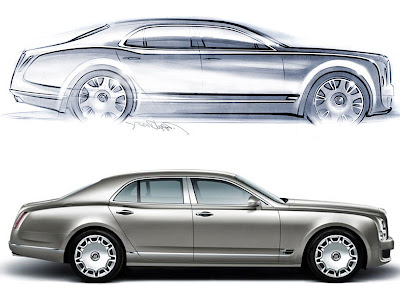
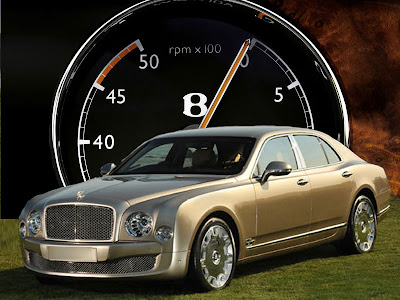
It's not like we want to say this, it's that we aren't sure there's any other choice: if you want to have it all, the Bentley Supersports is probably it. And we only say "probably" on the off chance there's a car out there we don't know about at this end of the spectrum that has the speed, space, smoothness, suppleness and sound to beat it. Maybe in a cave somewhere. If Bentley would just fix that center console screen and software, then we'd really have nothing to complain about.

For much of its history, Bentleys have shielded occupants from the action by placing scads of cloth, leather, hide and wood between the driver and the din and the dynamics. And that was the point – that's why you bought a Bentley. So while the Continental GT is a fantastic coupe, it isn't visceral. The Supersports, though, is a fantastic coupe that is.

[Source: Autoblog]

Tuesday, January 12, 2010

Detroit 2010: Bentley Series 51 Continental GTC

Bentley Series 51 Continental GTC

Bentley was the only ultra-luxury marque to have a stand-alone display at the Detroit Auto Show and the British brand came strong with its upcoming Mulsanne flagship in the flesh and this special edition Continental to pique our interests. The Continental is already a stunner in its "base" trim, but not everybody is content with an "ordinary" Bentley.

The ultra-exclusive Continental adds a new Series 51 trim for 2010, named after Bentley's first official styling department in the 1950s. Series 51 trim will be available for the entire Continental lineup and offer exclusive exterior design cues and a unique color palette. We're talking three-tone leather with contrasting piping and stitching here, folks. Check the Series 51 box and you'll also get 14-spoke, 20-inch wheels and a Series 51 badge on the front wings.

Bentley prepares accessible models

Bentley logo

English motor-car manufacturer Bentley, whose sales because of financial crisis have fallen several times, with a view of expansion of client base plans to make two new budgetary models.

Bentley: universal & crossover

In five years in the automobile market should debut a universal and a crossover. The given models begin to be positioned as budgetary cars though their cost will be high enough. As writes Leftlanenews, the price of a universal and a crossover will make from $110,000 to $130,000 so get novelties provided enough people can to afford.

Both models, most likely, will construct on new platform Audi A6 of following generation. It is not excluded, that buyers of new production Bentley will have an opportunity to get a universal and a crossover with the diesel unit. All motors will join only with an automatic transmission.

Bentley for the poor

Manufacture "cheap" Bentley can already begin in 2014. It is supposed, that annually the company will collect an order of 7,500 copies of cars.

Related Posts: Bentley

Thursday, December 31, 2009

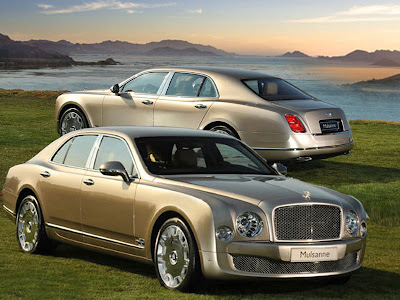
2010 New Bentley Mulsanne Luxurious Sports Car The 8-litre’s Debut at Pebble Beach Concours D’Elegance, California

2010 New Bentley Mulsanne Luxurious Sports Car

2010 Bentley Motors
unveiled the Mulsanne, the company’s all-new flagship grand tourer, at the prestigious Pebble Beach Concours D’Elegance in Monterey, California. The Mulsanne is inspired by the company founder W.O. Bentley’s crowning achievement in 1930, the 8-litre. And it was W.O.’s own sensitively conserved company car that shared the podium with the new Mulsanne in Pebble Beach. This early motoring masterpiece represented the last big Bentley that was designed, engineered and built from the ground up by Bentley engineers - until now.
2010 New Bentley Mulsanne Luxurious Sports Car

Nearly 80 years later, while paying respect to this illustrious past, the new Mulsanne is a thoroughly modern statement of luxury driving and grand touring. Conceived, styled and engineered entirely at Bentley’s headquarters in Crewe, England, the Mulsanne, with its completely new and unique platform, goes into production next year in a new state-of-the-art manufacturing facility within the Crewe factory. The Bentley design team, lead by Dirk van Braeckel, have created a flagship that offers the classic sporting, styling cues long-associated with Bentley - expressed in a thoroughly contemporary way.
2010 New Bentley Mulsanne Luxurious Sports Car

The return of the Mulsanne name to a car carrying Bentley’s iconic ‘Winged B’ emblem underlines the company’s racing pedigree and nowhere reflects that heritage better than the famed Le Mans circuit, the scene of no fewer than six Bentley triumphs. Few places offer a stronger or more emotive connection with the Bentley marque than the famed Mulsanne corner.
The Bentley 8-litre displayed alongside the Mulsanne in California was first shown at the 1930 London Motor Show.
2010 New Bentley Mulsanne Luxurious Sports Car

It was the second-built and was W.O. Bentley’s company car for two years. Capable of reaching more than 100 mph, the 8-litre demonstrated W.O. Bentley’s ambition and ability to build a grand luxury car capable of surpassing every other leading manufacturer of the day. A total of 100 cars were built in 1930 and 1931.
2010 New Bentley Mulsanne Luxurious Sports Car

“The 8-litre’s breathtaking performance and quality was perhaps the finest example of a ‘pure’ grand Bentley. Every mechanical detail carried W.O. Bentley’s unique stamp and it was the clearest demonstration of a car built without compromise,” commented Dr. Ulrich Eichhorn, Member of the Board Engineering. “The Mulsanne has been designed with exactly the same guiding principles, so it is entirely fitting that these Bentleys from different eras share the same stage.”
2010 New Bentley Mulsanne Luxurious Sports Car

The Bentley Mulsanne will go on sale from mid 2010. It will also be displayed at the forthcoming IAA Frankfurt Motor Show (15-27th September, 2009) where Bentley Motors will provide additional product information.

Friday, November 20, 2009

2010 Bentley Continental Supersports Car is a twin-turbocharged, 6.0 litre W12 engine the fastest, most extreme Bentley ever


2010 Bentley Continental Supersports Car

The Bentley Continental Supersports is the first Bentley model to be designed with some thought given to the environment. Bentleys will never be the most economical or environmentally friendly of vehicles but at least they're recognizing the fact that times are changing.The Continental Supersports began as an 'under the radar' project exploring the possibilities of weight reduction on the Continental GT but with more power and torque.The Bentley Continental Supersports is the fastest and most powerful Bentley ever. It is the extreme Bentley, a muscular two-seater that delivers supercar performance and a highly focused driving experience. The Bentley Continental Supersports is also the first Bentley capable of running on both petrol (gasoline) and biofuel, pioneering the use of FlexFuel technology in the luxury sector. This represents stage one of the company's commitment to make its complete model range compatible with renewable fuels by 2012. Available worldwide from autumn 2009, the Bentley Continental Supersports will be FlexFuel compatible in the majority of markets from launch with North American cars offering the capability by summer 2010, following regulatory approval
2010 Bentley Continental Supersports Car

A largely experimental process crystallised over a period of 24 months into an official new car programme, driven by the passion and enthusiasm of a small group of Bentley engineers and designers.
Powering the Continental Supersports is a twin-turbocharged, 6.0 litre W12 engine which is capable of running on either regular gasoline or E85 biofuel, or a mixture of both. Despite the flex fuel capability the Supersports engine produces a massive 621 horsepower @ 6,000 rpm and 800Nm (590 lb-ft) of torque @ 1,700 rpm - 5,600 rpm. This means the Continental Supersports can reach 60 mph in just 3.7 seconds, 100 mph in 8.9 seconds, and top out at 204 mph.
2010 Bentley Continental Supersports Car

The Continental Supersports is fitted with Bentley's carbon-ceramic brakes as standard – the largest and most powerful ever fitted to a production car. The large diameter (420 mm front, 356 mm rear), lightweight discs and eight-piston calipers offer fade-resistant braking performance with minimal disc distortion under high thermal conditions. Overall, the engineering team have achieved a weight reduction of 110 kg (243 lb) compared with the Continental GT Speed.
The evolution of the Bentley Continental Supersports' design is very much a case of 'form following function' with new purposeful sculptural forms signalling the engineering changes beneath the skin.
2010 Bentley Continental Supersports Car

The Continental Supersports agility is further sharpened by the 40:60 rear-biased torque split for the all-wheel drive system, a wider rear track, bespoke lightweight 20-inch alloy wheels and a unique electronic stability program.Cosmetic changes to the Bentley Continental Supersports have arisen due to the new powertrain.
The 'Supersports' name is inspired by the original two-seater 3-litre Supersports model introduced in 1925, itself an evolution of the 3-litre Speed. The lightweight, 85 bhp Supersports was the first production Bentley to reach 100 mph and was also renowned for the application of Le Mans-winning race technology.
2010 Bentley Continental Supersports Car

Commenting on the new Supersports model, Dr. Franz-Josef Paefgen, Bentley's Chairman and Chief Executive said: "The Bentley Continental Supersports reflects the passion and enthusiasm of Bentley's engineers and designers. This is the fastest, most extreme Bentley ever, dramatically styled to underline its supercar character. Importantly, it also pioneers the use of FlexFuel technology in the luxury sector."

Wednesday, November 18, 2009

2010 Bentley Continental GTC Speed The Super Sports Car 600bhp, 6-litre, twin-turbocharged W12 engine.

2010 Bentley Continental GTC Speed

Introduction of the new Bentley Continental GTC range builds on this success with a subtle evolution of its distinctive style and a range of technical and feature enhancements benefiting comfort and customer choice. The appeal of the GTC is further strengthened by the addition of the new 600bhp (610PS) Bentley Continental GTC Speed model. It is Bentley's most powerful convertible ever and inspired by Bentley's legendary 'Speed Models' from the 1920s.
2010 Bentley Continental GTC Speed

The Bentley Continental GTC Speed is visually distinguished by subtle design enhancements which emphasise its higher performance credentials. At the front, the radiator and lower air intake grilles feature a dark tinted matrix as standard. Larger diameter 9.5J x 20-inch, multi-spoke alloy wheels with Bentley-bespoke Pirelli PZero ultra-high performance (UHP) tyres, lowered and uprated suspension, wider twin-rifled exhaust tail pipes and a new boot-mounted lip spoiler that enhances high speed aerodynamics, reinforce the sporting character of the Speed model.
2010 Bentley Continental GTC Speed

The GTC Speed's 600bhp (610PS) W12 engine develops 9 per cent more power than the standard GTC. However, it is the 15 per cent increase in torque that really distinguishes the Speed model, which now develops an impressive output of 750 Nm (553lb ft). This is achieved across virtually the complete rev range, from just 1700 to 5600 rev/min, delivering that characteristic Bentley wave of torque.Engine efficiency improvements result from the use of
lower friction, lighter-weight components and a new engine management system, while twin, low inertia turbochargers with minimal turbo lag contribute to the W12 engine's flat torque curve. The GTC Speed engine is visually differentiated by the 'crackle black' finish to the intake manifold.The Continental GTC's steel body has an exceptionally rigid torsional stiffness of around 30Hz that not only minimises 'scuttle shake' but provides a very stable platform for the aluminium-intensive suspension system, optimising its performance. Despite the boost in power and torque for the GTC Speed model, no changes to the body structure were required.
2010 Bentley Continental GTC Speed

The Bentley Continental GTC Speed has a unique set of design cues, notably a dark-tinted matrix grille to the upper and lower air intakes, a black very stable platform for the aluminium-intensive suspension system, optimising its performance. Despite the boost in power and torque for the GTC Speed model, no changes to the body structure were required.The Bentley Continental GTC Speed has a unique set of design cues, notably a dark-tinted matrix grille to the upper and lower air intakes, a black lower bumper valance, wider, rifled exhaust tailpipes and 20-inch, silver-painted, multi-spoke alloy wheels.The wheels are available as an option with a special dark tint finish.
2010 Bentley Continental GTC Speed

The GTC Speed's cabin is based on that of the Mulliner Driving Specification (a cost option on the standard GTC). It features diamond quilted hide seats with embroidered Bentley emblems, a knurled chrome and hide gearlever and a three-spoke multi-function steering wheel with brushed aluminium switch surround.
These are complemented by drilled alloy foot-pedals and 'Speed' logos to the polished treadplates. The standard GTC also receives a new Bentley 'B' brake pedal.